
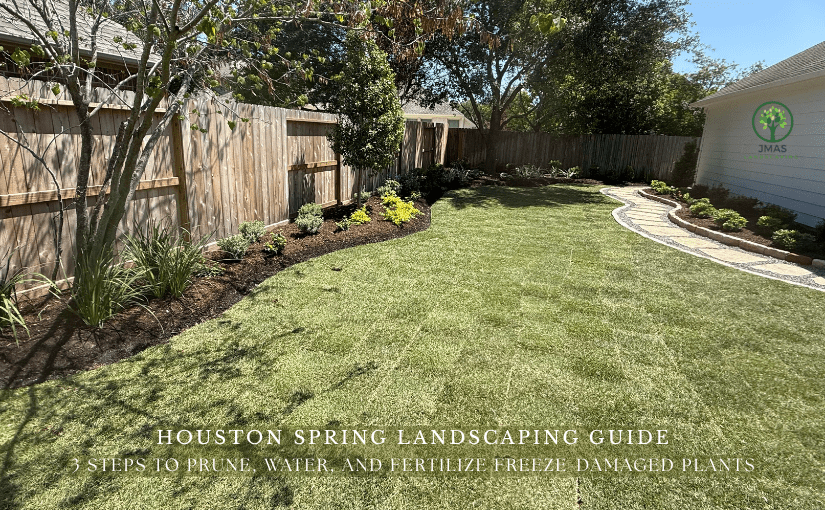
Winter freezes are a reality for homeowners in Houston. After a cold snap, many landscapes can look brown, wilted, or even dead. Fortunately, many common plants used in Texas landscapes are hardy perennials that simply go dormant during freezing temperatures.
With the right spring landscape maintenance, pruning, watering, and fertilization, most of these plants will quickly recover and produce fresh growth.
If you’re wondering when to prune lantana, how to cut back salvias after a freeze, or what to do with freeze-damaged plants, this guide will help you get your landscape back in shape.
Why Many Texas Landscape Plants Look Dead After a Freeze
Many plants used in landscapes throughout Houston and surrounding areas are warm-season perennials. During freezing temperatures, their foliage dies back to protect the roots. This dormancy is completely normal. Once spring temperatures begin to warm, most of these plants will start producing new growth from the base of the plant.
Common freeze-dormant plants used in Houston landscaping include:
- Salvias
- Lantanas
- Texas Sage
- Cuban Gold Duranta
- Many ornamental perennials used in Texas landscaping
If the roots survived the freeze (Which they usually do) your plants should recover with proper pruning, watering, and fertilization.
Step 1: Remove Freeze-Damaged Foliage
The first step in spring landscape cleanup is to remove the dead foliage from plants that were damaged during winter. Look closely at the base of the plant. In most cases, you’ll already see small green leaves emerging from the bottom. Simply cut back the dead material above the new growth.
If your plants have not started growing yet, do not panic! A few warm weeks and proper watering usually trigger new growth.
How to Prune Popular Landscape Plants
Proper pruning is one of the most important steps in spring landscaping maintenance. Each plant has slightly different pruning requirements. Below are the best pruning practices for several plants commonly used in Texas landscape design.
Texas Sage: Cut Texas sage back to about 12 inches tall in early spring, then allow it to grow naturally, only selectively trimming taller branches later in the year if needed.
Salvias: Salvias should be cut back to about 6–8 inches tall three times per year. Typically in early March, early June, and late August to encourage fuller growth and more blooms.
Lantanas: Lantanas respond well to hard pruning to about 6–8 inches tall three times per year, which helps produce stronger plants and more consistent flowering.
Cuban Gold Duranta: Cuban Gold Duranta can be cut back aggressively two to three times per year to maintain a compact shrub shape and encourage fresh golden foliage.
Step 2: Watering is Critical During a Dry Texas Spring
One factor many homeowners overlook is spring watering.
This year has been particularly dry across much of Fort Bend and Harris County, which can delay plant recovery after winter dormancy.
If plants are slow to bounce back:
- Water deeply once or twice per week
- Avoid shallow watering
- Ensure irrigation systems are working properly
Deep watering encourages strong root growth and faster recovery.
Step 3: Organic Fertilizing Helps Plants Recover Faster
Another important step in spring landscape maintenance is feeding plants after pruning.
Many professional landscapers in the Houston and Katy area prefer organic fertilizers, which improve soil health and provide nutrients slowly over time.
One commonly used organic fertilizer in Texas landscapes is Microlife, a natural fertilizer that contains beneficial microbes and organic nutrients that help strengthen plant roots and stimulate new growth.
Benefits of organic fertilizers like Microlife include:
- Improved soil biology
- Stronger root development
- Gradual nutrient release
- Healthier plants that are more resistant to drought and heat
Applying organic fertilizer in early spring can help plants recover faster from winter freeze damage and prepare them for the intense Texas summer.
Professional Spring Landscape Maintenance
Spring is one of the most important times of the year for landscape care. Proper pruning, watering, fertilizing, and maintenance now can determine how your yard looks for the rest of the growing season.
Many homeowners prefer professional help to ensure plants are pruned correctly and landscapes remain healthy.
JMAS Landscaping provides professional landscaping services for homes and neighborhoods throughout Katy, Fulshear, and surrounding Houston communities.
Our services include:
- Seasonal plant pruning
- Landscape bed maintenance
- Irrigation inspections and repairs
- Lawn fertilization and weed control
- HOA and residential landscape maintenance
Schedule Your Spring Landscape Service
If your plants were damaged during the winter freeze or your landscape needs seasonal maintenance, our team is ready to help. Professional pruning and maintenance will help your yard recover faster and stay beautiful all season long.
Contact JMAS Landscaping today to schedule your spring landscaping service.
Your landscape will thank you!