
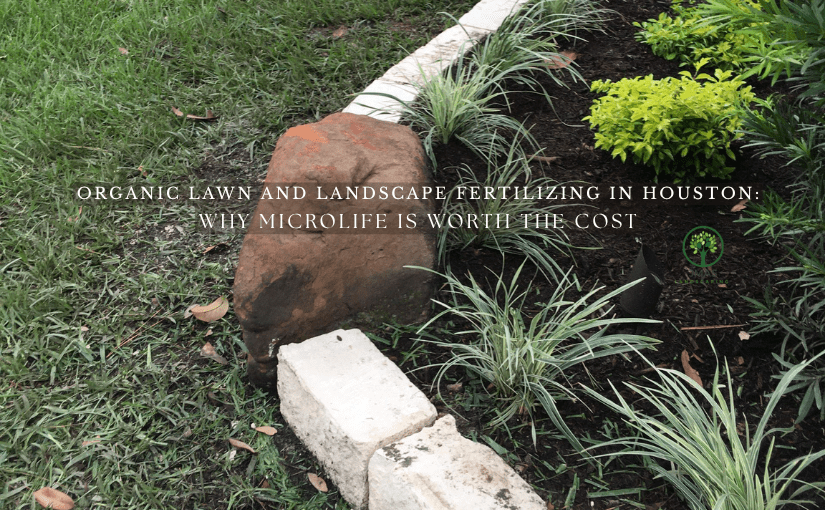
Healthy lawns and landscapes in Houston, Katy, and surrounding areas depend on more than watering and mowing. One of the most important factors in long-term landscape health is proper fertilization.
For many years, traditional chemical fertilizers were the most common option used on residential lawns. While these products can create quick green growth, they often do little to improve the underlying health of the soil.
Today, many professional landscapers and homeowners across the Houston area are turning to organic fertilizing programs, especially products like Microlife, to create stronger lawns and healthier plants.
Organic fertilizers work by improving soil biology, encouraging natural nutrient cycles, and strengthening plant root systems. While they may cost more than traditional fertilizers, the long-term benefits for lawns and landscapes can be significant.
Understanding Houston Soil Conditions
The soil throughout Houston, Katy, and surrounding areas of Fort Bend and Harris County presents several challenges for homeowners trying to maintain healthy lawns and landscapes.
Much of the region’s soil contains high clay content, which can lead to poor drainage, compaction, and limited natural nutrients for plants.
In addition, many residential developments are built on land where the natural soil has been disturbed during construction. This often leaves lawns with thin topsoil layers that struggle to support strong plant growth.
Over time, repeated use of synthetic fertilizers can further reduce soil health by disrupting beneficial microorganisms that naturally help plants absorb nutrients.
Organic fertilizing focuses on improving the overall condition of the soil, which allows grass, trees, and landscape plants to grow stronger and more naturally.
How Organic Fertilizers Work
Unlike synthetic fertilizers that deliver nutrients quickly, organic fertilizers rely on natural biological processes within the soil.
Organic fertilizers contain natural materials that feed beneficial microbes and microorganisms living in the soil. These microbes break down organic matter and slowly release nutrients that plants can absorb through their root systems.
This process helps build a healthier soil ecosystem and improves the way soil retains nutrients and moisture.
Over time, lawns and landscape plants develop stronger root systems and become more resilient to environmental stress.
For homeowners in the Houston area, this can mean better tolerance to heat, drought, and heavy rainfall.
Why Many Landscapers in Houston Use Microlife
One of the most commonly used organic fertilizers in the Houston landscaping industry is Microlife.
Microlife is a Texas-based organic fertilizer designed specifically for the soil and climate conditions found throughout Southeast Texas. It contains a blend of organic nutrients, beneficial microbes, natural minerals, and biological stimulants that support soil health.
Rather than forcing rapid top growth, Microlife works by strengthening the soil ecosystem and encouraging natural plant development.
Benefits commonly associated with Microlife fertilizing include:
- Improved soil biology
- Stronger root development
Better nutrient absorption - Healthier turf and landscape plants
- Increased resistance to heat and drought
Because nutrients are released slowly and naturally, lawns and plants receive consistent nourishment over time instead of the rapid spikes often caused by chemical fertilizers.
Organic Fertilizer vs Traditional Chemical Fertilizer
Many homeowners in Houston, Katy, and Fulshear are familiar with the immediate results of synthetic fertilizers. These products often produce fast green growth within a few days.
However, that rapid growth is typically concentrated in the leaves rather than the root system. As a result, lawns may require more frequent fertilizing and watering to maintain their appearance.
Organic fertilizers work differently by focusing on long-term soil improvement rather than short-term growth.
While the results may take slightly longer to appear, organic fertilizing supports deeper roots and healthier soil conditions that benefit the lawn over time.
For many landscapes in Houston’s challenging climate, stronger roots and improved soil structure can make a significant difference in plant health and durability.
The Long-Term Benefits of Organic Fertilizing
Organic fertilizing is often viewed as an investment in the long-term health of a lawn and landscape.
When soil health improves, plants are better able to absorb nutrients, retain moisture, and resist environmental stress.
Over time, homeowners may notice several improvements:
- Thicker and healthier lawns
- Stronger landscape plants
- Improved drought tolerance
- Reduced need for frequent fertilization
- Better overall soil structure
For landscapes in Houston’s hot and sometimes unpredictable climate, these benefits can help maintain a healthier yard throughout the year.
Organic Fertilizing for Lawns and Landscapes in Houston
Because of the unique soil conditions and climate challenges in Southeast Texas, many landscaping professionals recommend organic fertilizing as part of a long-term landscape care program.
Products like Microlife provide a natural way to improve soil biology while supporting the health of lawns, trees, and ornamental plants.
Homeowners who invest in organic fertilizing often see gradual improvements in lawn thickness, plant health, and overall landscape appearance as soil conditions continue to improve.
Schedule Organic Fertilizing for Your Lawn
If your lawn or landscape could benefit from stronger roots, healthier soil, and more resilient plant growth, organic fertilizing may be a great solution.
Using organic fertilizers like Microlife can help build healthier soil and create a landscape that performs better in Houston’s demanding climate.
Contact JMAS Landscaping today to schedule organic fertilizing services in homes and communities throughout Houston, Katy, Fulshear, and surrounding West Houston neighborhoods.