
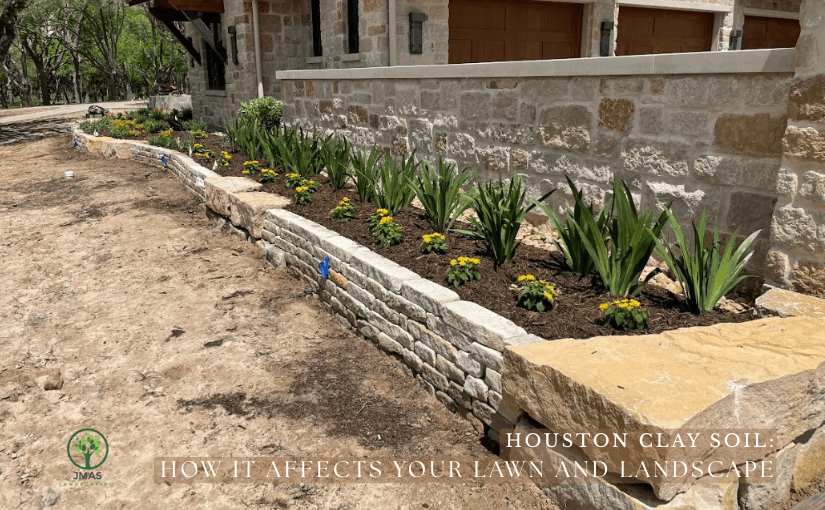
If you live in Houston, you’ve likely dealt with dense, sticky clay soil. While common across Southeast Texas, this soil type can create challenges for drainage, root growth, and overall plant health. Understanding how Houston’s clay soil behaves is the first step to creating a healthier, more resilient landscape.
What Makes Clay Soil Different?
Clay soil is made up of very fine particles that pack tightly together. In Houston’s humid climate, this leads to:
- Poor drainage: Water drains slowly, causing puddling and runoff.
- Compaction: Soil becomes hard when dry, limiting root growth.
- Nutrient retention: Clay holds nutrients well, but they’re not always easily accessible to plants.
- Expansion and contraction: Soil swells when wet and shrinks during dry spells, which can stress lawns and foundations.
How Clay Soil Affects Your Lawn
1. Drainage Problems
After heavy rain, water may sit on the surface instead of soaking in. This can lead to root rot, fungal diseases, and thinning grass.
2. Shallow Root Systems
Compacted clay makes it difficult for roots to grow deep, resulting in weaker turf that struggles during heat or drought.
3. Increased Runoff
Because water doesn’t absorb quickly, fertilizers and nutrients may wash away before they can benefit your lawn.
How Clay Soil Impacts Landscape Plants
Some plants struggle in clay, especially those requiring well-drained soil. However, many Texas-adapted plants tolerate these conditions well. Choosing the right plant varieties is essential for long term success.
Trees and shrubs may also develop stressed root systems if soil remains overly saturated or compacted for long periods.
How to Improve Houston Clay Soil
The good news? Clay soil can be improved with the right approach.
Add Organic Matter: Incorporate compost, aged mulch, or soil conditioners to improve structure and encourage better drainage.
Aerate Your Lawn: Core aeration reduces compaction and allows air, water, and nutrients to penetrate deeper into the soil.
Install Proper Drainage: French drains, grading adjustments, or improved irrigation systems can prevent standing water.
Choose Clay-Tolerant Plants: Opt for native and drought-tolerant plants that naturally adapt to Houston’s soil conditions.
Building a Healthier Landscape
While Houston’s clay soil presents challenges, it also offers benefits when properly managed. With soil amendments, smart plant selection, and proper lawn care, you can create a thriving landscape that withstands heavy rains and hot summers alike.
Understanding your soil is the foundation of a healthy yard and with the right strategy, even heavy clay can support a beautiful, long lasting landscape.